I want to talk about something that has been bothering me for a while.
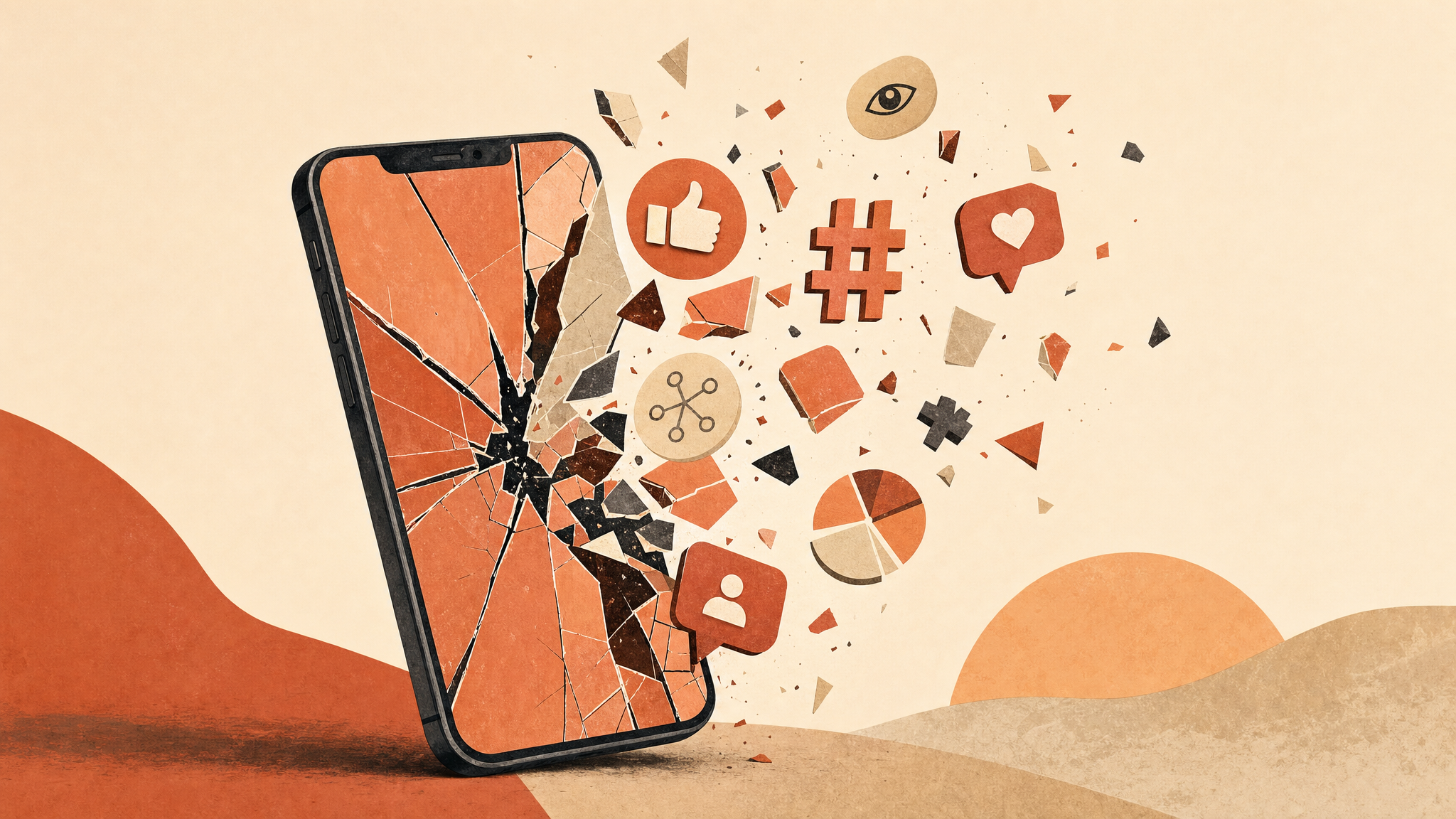
There is an enormous amount of bad information circulating in the creator community — handed down like folklore, repeated in webinars, whispered in comment sections — and most of it is just wrong. Not slightly off. Not a matter of interpretation. Factually, provably wrong.
And yet creators are making real decisions based on it. Posting less because they're scared of the algorithm. Removing links from captions. Avoiding scheduling tools. Panicking about shadowbans. Obsessing over hashtag stacks. All of it energy that should be going into making better content, wasted chasing ghosts.
I built Tonimus to help creators stop guessing and start growing. So let's kill some myths.
1. Shadowbanning is not real.
I know. You're certain it happened to you. Your reach dropped overnight and nothing else changed. It must be a secret punishment.
It isn't. The head of Instagram has said explicitly and repeatedly that there is no hidden throttle system quietly burying accounts. Posts can be downranked for violating recommendation guidelines — but that's a content quality decision, not a conspiracy. The difference matters. If your content was deprioritized, the algorithm made a judgment about that content. That's something you can fix. A shadowban is something that happens to you with no recourse and no explanation — and it doesn't exist.
The myth survives because blaming a secret system is more comfortable than asking whether the content was actually good.
2. Your phone isn’t listening to you (well — kinda, but not how you think).
This one makes me laugh every time I hear it, and I hear it constantly. Someone mentions running shoes out loud and sees a Nike ad an hour later and is absolutely convinced their phone recorded the conversation and sold it to advertisers.
Here’s the nuance: your phone does process audio locally — that’s how Siri and “Hey Google” work. On-device, for your ears only. That audio isn’t being packaged up and shipped to Meta’s ad servers. Think about what that would actually require — the scale of FTC violations alone would be catastrophic. Every major platform would be facing criminal liability. It would be the largest surveillance scandal in history, and somehow nobody has ever found a shred of proof.
What actually happened: you searched for running shoes last week, you follow three fitness accounts, you clicked on a sportswear post six weeks ago, and the algorithm connected those dots. You’ve handed these platforms an extraordinarily detailed picture of your interests and behavior — they don’t need your microphone. They already know what you want before you say it out loud. That’s arguably creepier, but it’s the truth.
3. Posting more will not hurt your reach.
There is no algorithmic penalty for posting frequently. None. Instant Bollywood posts a hundred times a day — not an exaggeration — and generated 9.2 billion views in a single month. The algorithm doesn't punish volume. It rewards quality.
If you have good content, post it. If you're posting more and your numbers are dropping, the problem isn't the frequency — it's that some of that content isn't as strong. The algorithm is simply accurate.
4. Scheduling tools will not hurt your reach.
This myth has been dead for years and still refuses to stay buried. Every major platform — Instagram, TikTok, YouTube, LinkedIn — has explicitly confirmed that scheduling through native tools or third-party platforms has no negative effect on distribution.
Scheduling is not a cheat code. It's just good operations. It lets you batch your work, post consistently, and free up mental energy for the part that actually matters: creating. If you're not scheduling your content, you're working harder than you need to.
5. Paid partnership tags do not limit your reach.
There is zero evidence that sponsored content gets algorithmically suppressed. The reason branded posts often underperform has nothing to do with the tag — it's because most brand deals require creators to sand down their edges, follow a brief, and produce something generic. Generic content underperforms. That's the whole story.
The best-performing sponsored content happens when brands get out of the way and let creators be themselves. When that happens, sponsored posts perform just as well as organic ones — sometimes better, because there's actual budget behind the idea.
6. You do not have to post every single day.
Consistency matters. Daily posting does not. Meta themselves confirmed that posting three times a week is enough to keep you consistently in the algorithm and eligible for recommendations. That's the floor, not the ceiling — but it means if you're burning yourself out trying to produce something every 24 hours, you're doing more damage than good.
Three strong posts a week will outperform seven mediocre ones every time. Rest is part of the strategy.
7. Hashtags are not a growth engine.
Hashtags help the platform categorize your content. That's it. They are not a distribution amplifier. They are not a substitute for a caption. Stacking thirty of them at the end of your post will not push you to new audiences.
Modern algorithms read your captions, analyze your visuals, and understand your content in context. They have been doing this for years. Hashtags provide a small assist on categorization — useful, not magical. One or two if they add something. Otherwise, skip it.
8. Editing in third-party apps will not hurt your performance.
CapCut, Adobe Premiere, DaVinci Resolve, Final Cut — use whatever makes your content better. The platform doesn't care where you edited. It cares whether people watch.
Two things that actually do matter: watermarks and endslates from other platforms. If you're reposting a TikTok on Instagram Reels with the TikTok logo still in the corner, that will get flagged and could limit distribution. Export clean. That's the rule.
(Instagram has said content edited in their own Edits app gets a very slight boost — but it's minor enough that I wouldn't change my entire workflow over it.)
9. External links do not punish your posts.
There is no evidence that including a link in a caption suppresses distribution. Posts with links often get less engagement — but that's because people click the link and leave. They stop scrolling. The algorithm reads that as lower engagement and distributes accordingly. That's a user behavior problem, not a platform conspiracy.
Sometimes you need to post a link. Post the link. Don't tie yourself in knots trying to hide it in comments or bios when a direct caption link would serve your audience better.
10. There is no magic time to post.
Every few months someone publishes a whitepaper claiming they analyzed ten thousand accounts and found the optimal posting window. It's almost always Tuesday at 9 AM or something equally arbitrary. And it's almost always nonsense.
The only real rule: post when your audience is awake. Don't post at 3 AM in your target timezone. Beyond that, the algorithm doesn't care what time it is — it will find your content an audience when that content deserves one. The hour of posting has never been the reason something went viral, and it has never been the reason something flopped.
So what's actually killing your growth?
The answer is uncomfortable, which is why the myths are so persistent.
You're not being throttled. You're not being listened to. You're not being punished for scheduling or linking or posting at the wrong time. The algorithm is not your enemy.
The content just isn't connecting. And that's harder to sit with than a shadowban, because it means the work isn't done yet.
Stop optimizing around things that don't matter. Start putting that energy into understanding your audience, sharpening your point of view, and making content that earns attention rather than expecting it.
That's the whole game. It always has been.
Not sure what's holding your revenue back?
Take the 5-question Creator Revenue Audit. Find out exactly what type of creator you are — and what's silently costing you money.
Take the Free Quiz →Tonimus handles the consistency. You handle the creativity.
Stop spending your energy on posting schedules, timing anxiety, and algorithm myths. Tonimus posts autonomously across your platforms so you can focus on making content worth watching.
Get Early Access Now